Finding the China Best Mens Terry Jacket Supplier requires more than comparing unit prices. Buyers must examine fabric quality, production control, communication, and compliance evidence. A reliable supplier should explain its terry composition, fabric weight, shrinkage rate, colorfastness, and finishing process clearly.
The market is also becoming more demanding. Textile Exchange’s Materials Market Report 2024 estimated global fiber production at about 124 million metric tonnes in 2023. It projects continued growth toward 2030, increasing pressure on suppliers to improve material transparency and resource efficiency. The Business of Fashion and McKinsey’s State of Fashion 2025 also highlights cautious consumer spending and stronger expectations for value. This affects every Mens Terry Jacket order, especially private-label collections with narrow margins.
A practical supplier review should include sample testing and factory communication. Ask for fabric swatches. Wash the sample twice. Check the cuffs, zipper, seams, and pocket lining under natural light. Small defects often appear there first. Factory audits, certifications, production photographs, and export experience can support supplier claims, but documents alone are not enough.
No supplier is perfect. A low-cost quote may hide weaker recovery, inconsistent dyeing, or limited quality control. I have found that response speed can reveal operational discipline, although it is not conclusive. This guide compares Chinese manufacturers through measurable criteria, including product consistency, customization ability, order flexibility, lead times, and responsible sourcing practices. The goal is not to name one universal winner, but to identify the right partner for a specific market and product standard.
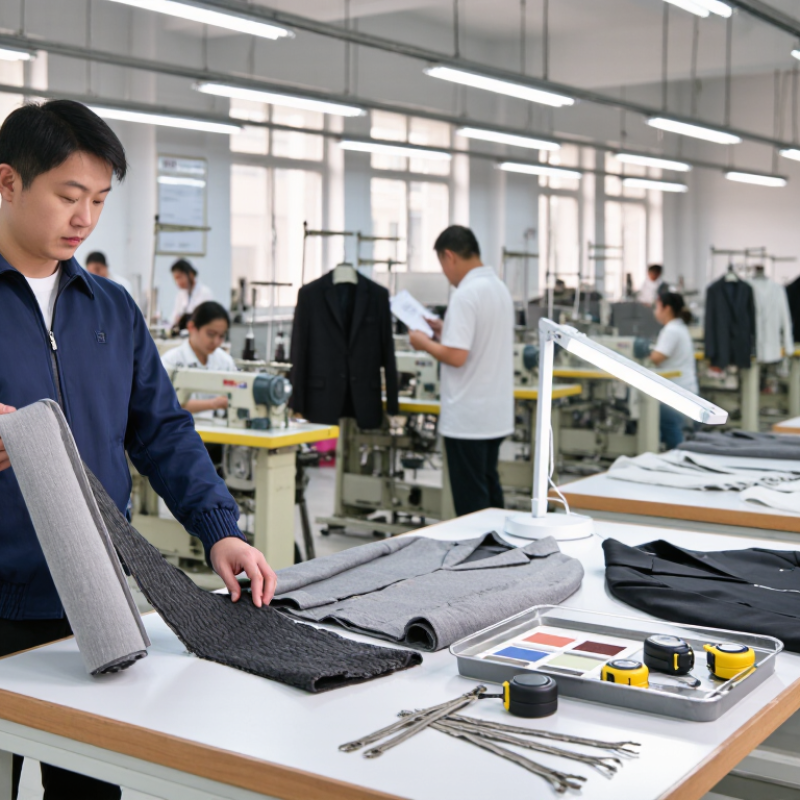
A men’s terry jacket uses looped fabric, usually cotton, cotton blends, or recycled polyester. The loops create softness, breathability, and moderate warmth without the weight of fleece. Common styles include zip jackets, hooded overshirts, and rib-trimmed track jackets.
Material choice matters. Textile Exchange reported that polyester represented 57% of global fiber production in 2023, while cotton accounted for 22%. For a premium terry jacket, buyers should check fiber content, fabric weight, shrinkage, and colorfastness. A 280–400 GSM fabric often feels substantial, but GSM alone cannot prove comfort. I have seen heavy samples feel rough after washing.
China remains a strong sourcing option because spinning, knitting, dyeing, cutting, and garment finishing operate within a mature supply network. The WTO reported approximately US$153.8 billion in Chinese textile exports during 2022. That scale can support flexible quantities, technical development, and competitive production costs. A reliable supplier should provide pre-production samples, test reports, measurement charts, and clear tolerance standards. Factory audits should review sewing lines, needle control, wastewater handling, and final inspection records. Certifications may help, but documents still require verification. No supplier is perfect. A sample can pass visual inspection and still fail after three washes. Ask for wash testing before approving bulk production.
China Best Mens Terry Jacket Supplier?
A quality terry jacket begins with the right fiber choice. Combed cotton gives a smooth face and soft inner loops. Recycled polyester can improve durability and drying speed. However, excessive synthetic content may reduce breathability. I check fabric weight, loop density, and recovery after washing. A medium-weight terry fabric often balances comfort, warmth, and daily wear.
Construction matters just as much. Look for even stitching around the shoulder, armhole, and side seams. Reinforced stress points reduce seam failure during repeated movement. A durable ribbed cuff should recover after stretching, not remain loose. The zipper must run smoothly without pulling the fabric. Flat seams feel better against the skin. Small details matter.
Shrinkage needs practical testing. I wash sample jackets several times and compare sleeve length, body width, and surface appearance. Colorfastness testing also helps prevent disappointing results. A heavier jacket is not always better. It may feel stiff. I once approved a dense fabric that looked premium but trapped too much heat. That mistake changed my fitting process. Real quality depends on balance, consistent production, and honest inspection records. Suppliers should provide measurable fabric specifications, sample reports, and clear tolerance standards before bulk manufacturing begins.
| Quality Dimension | Recommended Specification | Why It Matters | Quality Check |
|---|---|---|---|
| Main Fiber Content | 100% cotton for a natural hand feel; cotton-polyester blends commonly use approximately 60–80% cotton with 20–40% polyester. | Cotton provides softness and absorbency, while polyester can improve dimensional stability, drying speed, and abrasion resistance. | Verify fiber composition through the product specification and, when required, laboratory fiber-content testing. |
| Terry Loop Structure | Even, securely formed loops on the inner or outer surface, with no skipped rows, loose yarns, bald patches, or noticeable loop-size variation. | Consistent loops improve absorbency, surface appearance, durability, and resistance to snagging. | Inspect the fabric under bright light and gently pull the surface to identify loose or weak loops. |
| Fabric Weight | Approximately 280–450 GSM for a versatile midweight jacket; heavier weights may be selected for warmth and structured outerwear. | GSM affects warmth, drape, durability, drying time, and the perceived quality of the garment. | Measure fabric weight using a calibrated GSM cutter and scale, comparing results with the approved specification. |
| Yarn Quality | Combed or ring-spun yarn is preferred for a smoother surface; yarn should show consistent thickness and low visible contamination. | More uniform yarn generally supports a cleaner appearance, better softness, and reduced pilling risk. | Check for slubs, neps, thick-thin places, excessive hairiness, and surface contamination. |
| Stretch Performance | A small elastane component, commonly 2–5%, may be used in rib trims or selected fabric constructions when recovery is required. | Controlled stretch improves comfort and helps cuffs, hems, and waistbands return to their original shape. | Test widthwise stretch and recovery after repeated extension according to the agreed test method. |
| Colorfastness | Color should resist rubbing, washing, perspiration, and water exposure; testing should follow the destination-market requirements. | Good colorfastness reduces shade transfer, fading, staining, and consumer complaints. | Use recognized textile test methods, such as ISO or AATCC procedures, with agreed minimum ratings before bulk production. |
| Dimensional Stability | Shrinkage should remain within the approved tolerance after the specified care process; the exact limit depends on the garment design and market. | Controlled shrinkage helps preserve fit, sleeve length, hem position, and garment balance after washing. | Wash samples using the care-label instructions, then compare measurements before and after laundering. |
| Seam Construction | Use balanced lockstitch or overlock seams, clean seam allowance control, and reinforced stress points at armholes, pockets, cuffs, and zipper ends. | Sound seam construction improves tensile strength, comfort, appearance, and resistance to seam opening. | Inspect skipped stitches, open seams, uneven seam width, thread tension, and loose thread ends. |
| Stitch Density | Stitch count should be uniform and appropriate for the fabric thickness, with no visible puckering or excessive needle damage. | Consistent stitch density supports seam strength while maintaining a clean, comfortable appearance. | Check representative areas at the shoulder, side seam, sleeve, pocket, cuff, and hem. |
| Rib Trim Composition | Rib cuffs, collars, and waistbands should have compatible recovery and weight; cotton-rich rib with elastane is often used for a secure fit. | Proper rib recovery prevents stretched openings and helps block drafts at the wrists, neck, and waist. | Compare rib dimensions before and after repeated stretching and laundering. |
| Zipper and Hardware | Zippers should run smoothly, align with the center front, and have secure tape attachment; snaps and eyelets should be firmly set. | Reliable hardware improves daily usability and reduces failures at high-stress closure points. | Operate each closure repeatedly and inspect alignment, slider movement, attachment strength, and sharp edges. |
| Pocket Construction | Pocket openings should be symmetrical, securely bartacked or reinforced, and finished without exposed raw edges. | Pockets experience repeated pulling and abrasion, making reinforcement important for long-term wear. | Check pocket placement, opening dimensions, lining security, bartacks, and resistance to moderate loading. |
| Surface Finishing | The garment should be free from excessive lint, oil marks, needle holes, harsh hand feel, uneven brushing, and pressing shine. | Clean finishing directly influences comfort, appearance, and customer perception of quality. | Perform a final visual inspection under consistent lighting and conduct a hand-feel comparison with the approved sample. |
| Care and Compliance Information | Fiber labels, care instructions, country-of-origin information, and chemical or product-safety documentation should match the destination-market requirements. | Accurate information supports safe use, correct laundering, regulatory compliance, and consistent retail presentation. | Review labels, test reports, restricted-substance documentation, and packaging specifications before shipment. |
China Best Men’s Terry Jacket Supplier?
How to Evaluate China’s Best Men’s Terry Jacket Suppliers?
When evaluating Chinese men’s terry jacket suppliers, examine their production experience and material knowledge. Ask how long they have made terry garments. Experienced teams should explain fabric weight, loop structure, shrinkage, and color stability clearly.
Request a detailed sample before discussing large orders. Check the jacket’s softness, GSM, stitching, rib recovery, zipper movement, and seam strength. Details matter. Wash the sample several times and compare measurements afterward. A dependable supplier should provide fabric composition records, inspection procedures, and relevant test reports. Verify that these documents match the actual materials used.
A factory visit can reveal more than polished photographs. Observe fabric storage, cutting accuracy, sewing lines, finishing areas, and final inspection routines. Ask how defects are recorded and corrected. Ask directly. Communication also deserves careful testing. Send a technical specification and check whether the supplier answers each point accurately. Vague replies may create costly misunderstandings.
I once accepted a promising sample without checking shrinkage after washing. The finished batch changed more than expected. That mistake taught me to approve measurements in writing. It is also wise to order a second sample after revisions. One perfect sample cannot prove stable production. Review lead times, payment terms, packaging details, and quality responsibilities before signing anything. A reliable supplier welcomes practical questions, though no factory performs perfectly every time.
China Best Mens Terry Jacket Supplier?
A capable supplier should offer more than a low quotation. Buyers should expect fabric development, pattern adjustment, and controlled production. Terry weight, loop structure, and cotton content affect warmth, drape, and durability. Ask for a fabric specification sheet. It should show GSM, composition, width, and shrinkage results. A reliable factory also reviews your tech pack before sampling. This prevents unclear measurements from becoming expensive mistakes.
Customization may include colors, rib trims, zippers, pockets, embroidery, and private labels. However, every added detail can change cost and lead time. Request a pre-production sample, wash test, and size-set approval. Quality teams should check seam strength, colorfastness, measurements, and surface defects. An AQL-based inspection can provide a clearer release standard. Factory photos help, but traceable inspection records are stronger evidence. One weakness remains common: samples may look excellent while bulk fabric varies slightly. Buyers should compare approved standards with finished cartons.
Tips: Confirm MOQ, payment stages, delivery dates, and defect handling in writing. Keep one sealed reference sample. Ask who pays for rework. Review packaging, carton marks, and loading photos before shipment. Also, do not trust “premium quality” without test results. Even experienced buyers miss small details. A second review often catches them.
Illustrative planning benchmarks for custom terry jacket orders, from sample development to bulk shipment handover.
Buyers should typically allow time for fit approval, fabric and trim confirmation, pre-production sampling, bulk manufacturing, final inspection, and shipment preparation. Actual lead times depend on order quantity, fabric availability, customization level, and testing requirements.
China Best Mens Terry Jacket Supplier?
Buyers should compare landed cost, not only the factory quotation. A jacket priced at $18 may become $24 after sampling, labels, inspection, freight, and import charges. The WTO World Trade Statistical Review 2024 places China among the leading clothing exporters, with annual apparel exports near US$170 billion. This scale can support competitive pricing, but quality varies widely. Request the same specification from each supplier: fabric composition, weight, shrinkage tolerance, zipper type, packaging, and approved sample.
Minimum order quantity needs equal attention. A 300-piece MOQ may suit a test launch, while 2,000 pieces could reduce the unit price but increase inventory risk. Ask for price breaks at three volumes. Also compare sample fees and mold or artwork charges. The International Trade Centre’s Trade Map helps buyers check tariff classifications and market import values, although it cannot verify factory workmanship. That limitation matters.
Delivery terms can quietly change the result. Compare EXW, FOB, and CIF using one shipment size and destination. Ask for production days, booking time, inspection time, and a realistic buffer. Freight prices are unstable; the Drewry World Container Index has shown sharp weekly movement during recent disruption periods. A supplier promising 20 days may still need 35 days door to door. I would record every assumption in writing. Some quotations look complete, but they are not.
It uses looped fabric made from cotton, blends, or recycled polyester. The loops provide softness, airflow, and moderate warmth. It feels lighter than fleece.
Check fiber content, GSM, width, shrinkage, and colorfastness. A 280–400 GSM fabric often feels substantial. GSM alone cannot guarantee comfort.
China offers integrated spinning, knitting, dyeing, cutting, and finishing networks. This can support flexible quantities, technical changes, and competitive costs. Scale helps, but it does not remove quality risks.
Request a pre-production sample, wash-tested sample, and approved size set. Compare measurements against the technical specification. Keep one sealed reference sample.
Options may include colors, rib trims, zippers, pockets, embroidery, and private labels. Each change can affect price and delivery time. Small details matter.
Check seam strength, measurements, colorfastness, surface defects, and fabric shrinkage. Wash the sample at least three times. A visually attractive sample may still fail later.
Review sewing lines, needle-control procedures, wastewater handling, and final inspection records. Verify test documents independently. Certifications help, but paperwork is not proof by itself.
Confirm quantities, payment stages, delivery dates, defect handling, and rework responsibility in writing. Use an agreed inspection standard, such as AQL. Compare approved standards with finished cartons.
Review packaging instructions, carton marks, loading photos, and measurement records before shipment. Request traceable inspection evidence. Factory photos alone are weak evidence.
Many buyers focus on the lowest quotation and overlook wash performance. I may still miss small issues. A second review often catches them.
A Mens Terry Jacket is a versatile garment known for its soft texture, comfortable fit, and practical warmth. When choosing a Chinese supplier, buyers can benefit from broad manufacturing capacity, flexible customization, and competitive production costs. Quality depends on the selection of terry fabric, such as cotton or blended fibers, as well as fabric weight, softness, shrinkage control, stitching strength, ribbed trims, zipper performance, and overall pattern accuracy. A reliable supplier should be able to explain these details clearly and provide samples for evaluation.
To identify the best supplier, buyers should review production experience, factory capabilities, communication efficiency, and quality-control procedures. Expected services may include private labeling, custom colors, size grading, packaging options, sample development, and inspection support. Price comparisons should consider material quality, order quantity, customization requirements, shipping method, production schedule, and payment terms rather than focusing only on the unit price. Buyers should also confirm minimum order quantities and delivery conditions in writing to reduce misunderstandings and support a smooth, consistent purchasing process.