Choosing the right Interlock Jacket supplier requires more than comparing unit prices. The fabric may look identical under showroom lighting, yet differ in weight, stretch recovery, pilling resistance, and shrinkage after washing. A reliable evaluation should begin with measurable specifications, including GSM, cotton or recycled-fiber content, stitch density, colorfastness, and dimensional stability. Request physical samples. Wash them repeatedly. Small defects often appear only after the third cycle.
Textile Exchange’s Materials Market Report 2024 reported global fiber production at approximately 124 million tonnes in 2023, with production potentially reaching 160 million tonnes by 2030. This growth increases the importance of material traceability and verified environmental claims. The Fashion Revolution Transparency Index 2023 reviewed 250 major fashion brands and reported an average transparency score of only 18%. That figure should make buyers cautious. Certifications alone are not enough.
Ellen MacArthur, a leading circular-economy authority, states, “A circular economy is based on the principles of designing out waste and pollution, keeping products and materials in use, and regenerating natural systems.” Her statement applies directly to supplier selection. Ask whether the factory documents recycled inputs, wastewater controls, energy use, and production waste. Check audit dates, not just certificate logos. Review MOQ, lead time, defect tolerance, and corrective-action records. A supplier can offer excellent samples but fail during bulk production. That possibility is uncomfortable, but realistic. The strongest Interlock Jacket partner combines technical consistency, transparent evidence, responsive communication, and practical capacity. No checklist is perfect. A careful buyer keeps testing.
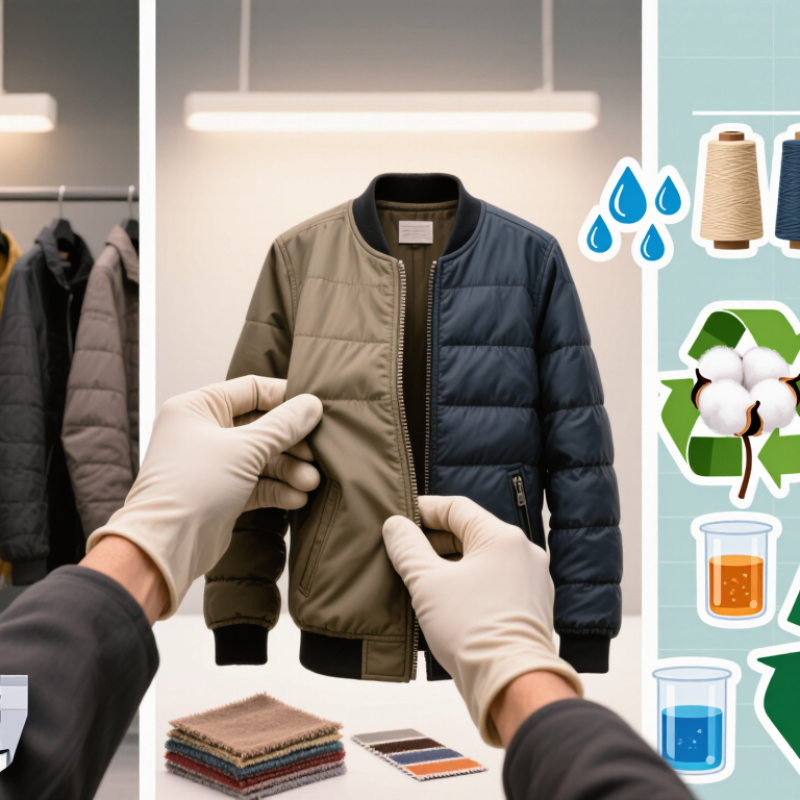
Define Your Interlock Jacket Requirements
Start with the garment’s job, not the supplier’s catalog.
A lightweight interlock jacket may need 220–260 GSM fabric for everyday layering. A winter version may require a denser knit and brushed inner surface. Define the fiber blend, fabric width, stretch direction, and recovery target. Specify whether the jacket needs moisture control, wind resistance, or easy-care performance. Small details matter.
I have learned that “soft” is not a complete requirement. Ask for measurable standards, such as pilling resistance, colorfastness, dimensional stability, and seam strength. Request fabric swatches and a finished sample. Wear-test the sample with a base layer. Check the zipper movement, cuff recovery, pocket shape, and collar comfort after washing. One sample can look excellent and still fail after repeated use.
Your specification should also include color references, size tolerances, packaging needs, minimum order quantity, and delivery expectations. Require clear inspection records and test reports from qualified laboratories when appropriate. Discuss acceptable defects before production begins. A supplier who explains limitations is often more reliable than one promising everything. Leave room for adjustment. My own specifications have sometimes been too precise in one area and too vague in another, especially around stretch recovery. Rechecking those points early can prevent costly revisions later.
Evaluate Supplier Experience and Production Capabilities
Choosing an interlock jacket supplier requires more than checking a polished factory website. I look for proven experience with double-knit fabrics, because interlock needs controlled weight, stretch recovery, shrinkage, and pilling performance. Ask for recent production records, not only sample photos. A reliable supplier should explain fabric composition, GSM tolerance, dyeing controls, and seam-testing procedures in clear terms.
Textile Exchange’s Materials Market Report 2024 recorded global fiber production at 124 million tonnes in 2023, with output projected to reach 160 million tonnes by 2030. This growth increases pressure on traceability and production planning. Your supplier should identify fiber sources, maintain batch records, and show how materials move through knitting, dyeing, cutting, and sewing. Capacity matters too. Check monthly output, machine availability, quality-control staffing, and backup plans during peak seasons. A large workshop is not automatically capable.
Tips:
Request a pilot order before bulk production. Test shrinkage after washing. Measure jacket weight across several pieces. Ask for inspection reports, lab results, and corrective-action records. Visit the production floor if possible.
Still, one visit can mislead. A clean floor may hide inconsistent subcontracting. Confirm who performs each process, and compare approved samples with finished goods. In my experience, suppliers sometimes promise faster delivery than their planning system can support. Leave room for delays, rework, and fabric replacement. Credible suppliers welcome these questions rather than avoiding them.
Check Fabric Quality, Certifications, and Customization Options
How to Choose the Right Interlock Jacket Supplier?
Check Fabric Quality, Certifications, and Customization Options
Interlock fabric should feel smooth, stable, and resilient after repeated handling. Ask for the fabric weight, fiber blend, width, and knitting details. A practical test includes stretching the fabric, washing a sample, and checking recovery. Look for uneven loops, loose edges, fading, or twisting seams. Small defects can become expensive problems during bulk production. Review shrinkage, pilling, colorfastness, and seam strength reports from an independent laboratory. Do not trust a polished sample alone.
Certifications should match your market and product requirements. Request current documents for textile safety, quality management, and environmental controls. Verify the certificate holder, validity period, testing scope, and production site. A certificate without traceable records proves very little. Ask whether each production batch receives inspection records. Factory audits, material traceability, and clear corrective actions also indicate stronger reliability. Suppliers should explain technical details without avoiding difficult questions.
Customization may include fabric weight, recycled fibers, color matching, rib structure, zipper selection, labels, and packaging. Request a development sample before approving the final pattern. Compare the sample under indoor and outdoor light. Color differences can appear surprisingly quickly. Confirm minimum order quantities, sample fees, lead times, and replacement policies in writing. I once considered customization only a design issue; that was too narrow. It also affects comfort, durability, compliance, and production risk. Some options sound attractive but may weaken the jacket or increase waste.
How to Choose the Right Interlock Jacket Supplier?
A practical supplier review should prioritize fabric performance, certification evidence, and the ability to meet customized specifications. The chart uses a recommended 100-point procurement weighting.
Fabric quality receives the highest weighting because interlock jackets must maintain dimensional stability, softness, colorfastness, and resistance to pilling. Certifications help verify chemical safety and quality-management practices, while customization covers fabric weight, colors, labels, trims, sizing, and packaging.
Compare Pricing, Minimum Orders, and Delivery Terms
Choosing the right interlock jacket supplier requires more than comparing the lowest unit price. Ask for a full quotation covering fabric weight, testing, packaging, tooling, payment, and freight. A jacket priced at $8 may become $10.50 after inspection and delivery. I have seen buyers miss this gap.
Minimum order quantity affects both cash flow and product risk. A low MOQ can justify a slightly higher price during sampling or a market test. However, suppliers may charge more for small dye lots or split production. Request prices for 300, 1,000, and 3,000 units. Compare the cost per jacket, not just the headline figure. Leave room for defects. Perfect forecasting is rare.
Delivery terms need equal attention. Confirm the production lead time, shipping method, dispatch location, and responsibility for customs clearance. UNCTAD’s Review of Maritime Transport reports that roughly 80% of global merchandise trade by volume moves by sea, so port delays can affect even well-planned orders. Ask for a written schedule with approval, production, inspection, and transit dates. Terms such as FOB or DDP can change the real landed cost substantially. A supplier promising seven days may mean seven days after fabric approval, not after the purchase order. That wording deserves challenge. Recheck quotes before signing, because freight and material costs can move quickly.
Verify Samples, Communication, and After-Sales Support
How to Choose the Right Interlock Jacket Supplier?
Verify Samples, Communication, and After-Sales Support
A reliable supplier should send a physical sample before bulk production. Inspect the interlock fabric under natural light. Check its weight, stretch recovery, surface softness, and color consistency. Measure the chest, sleeve, and body length against your specification sheet. Examine the zipper, cuffs, seams, and thread tension closely. A sample can look attractive while hiding weak stitching.
Request a wash test using clear instructions. Record shrinkage, color fading, pilling, and shape retention after several washes. Keep photos and measurements for comparison. I once overlooked a slightly twisted side seam during sampling. It became more visible after washing. That small mistake taught me to inspect garments after use, not only when they arrive. No sample is perfect. Ask the supplier to explain every variation.
Communication also reveals production discipline. Confirm response times, revision procedures, material availability, and inspection checkpoints. Good suppliers provide specific answers instead of vague promises. Ask who approves changes and how updates are documented. After-sales support matters when defects appear. The supplier should offer a clear claim process, evidence requirements, replacement options, and corrective action reports. Test this support before ordering at scale. Send a realistic problem scenario and observe the response. Fast replies are useful, but practical solutions matter more. A dependable partner accepts reasonable criticism and improves the process.
Conclusion
Choosing the right Interlock Jacket supplier begins with clearly defining your product requirements, including fabric weight, fit, color, sizing, intended use, and expected order volume. A suitable supplier should have proven experience producing similar garments, reliable production capacity, effective quality control, and the ability to meet your specifications consistently. It is also important to review fabric quality, relevant certifications, available customization options, and the supplier’s ability to provide accurate technical details.
Before making a decision, compare pricing, minimum order quantities, production schedules, shipping terms, and payment conditions. Request samples to evaluate stitching, fabric performance, comfort, sizing accuracy, and overall workmanship before placing a large order. Clear communication is equally essential, especially when discussing revisions, packaging, and delivery expectations. Finally, confirm the supplier’s after-sales support and approach to handling quality concerns or unexpected delays. A balanced evaluation of quality, capability, cost, communication, and service will help you select a dependable long-term partner.

 Jinmao