Top Foil Print Jacket Manufacturers for Global Buyers

Time:2026-10-29 Author:Henry
0%

A Foil Print Jacket can turn a plain shell into a striking product, but reliable results depend on more than a bright surface. Global buyers need manufacturers who can control foil adhesion, placement, hand feel, and color consistency across production runs. Small details matter: a sharp edge on a chest graphic, or foil lifting after washing, can change the whole impression.

Textile Exchange’s Materials Market Report 2024 estimates that global fiber production reached 124 million tonnes in 2023, with polyester accounting for 57%. That scale makes material selection and supplier transparency important when evaluating jacket makers. Ask manufacturers to identify the base fabric, explain their foil application process, and provide sample and care-test results. Request close-up photographs, too. They reveal uneven edges.

A suitable supplier should discuss minimum order quantities, lead times, inspection steps, and how production defects are handled. Buyers should compare physical samples under consistent lighting, since metallic finishes can look different on screen. Gloss is not enough.

I cannot verify a published quotation from a specialist focused specifically on Foil Print Jacket manufacturing, so I will not invent one. That limitation matters. This guide instead evaluates manufacturers through verifiable capabilities, documented material information, and practical quality checks. Even then, a sample cannot guarantee every bulk unit will match; independent inspection may still be worthwhile.
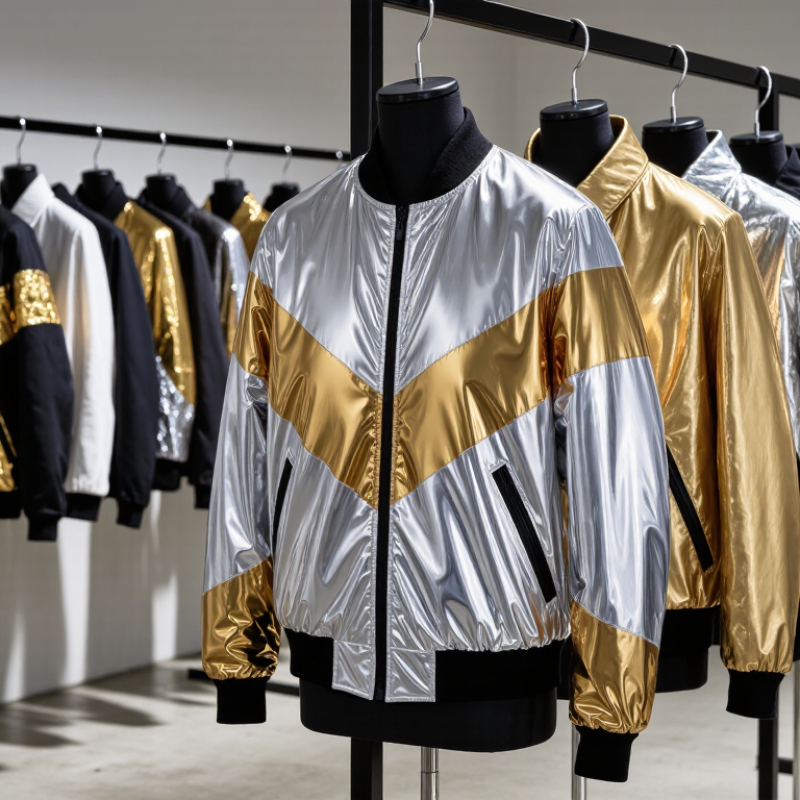
Top Foil Print Jacket Manufacturers for Global Buyers

What Defines a Foil Print Jacket and Its Key Applications

A foil print jacket uses a thin metallic-looking film or coating applied to selected areas of fabric. Heat and pressure often bond the foil to a printed adhesive layer, creating reflective panels, lettering, or fine decorative lines. The result can look bright under shop lighting, yet appear softer or darker outdoors. It is a surface effect, not woven metal.

The technique suits stage jackets, fashion outerwear, team warm-ups, and promotional garments where visibility and visual impact matter. A small foil logo on a sleeve may be more wearable than a full reflective back panel. Fabric choice matters: smooth, stable materials usually support sharper edges, while textured cloth can interrupt the print. Ask for a wash test on the actual fabric, and inspect bends around elbows and zippers. Foil may crack, lift, or lose shine with repeated wear. It can feel less breathable. That trade-off matters. Buyers should compare samples under different lighting and check care instructions before approving bulk production. A glossy sample alone is not enough. The finish is attractive, but sometimes less durable than expected.

How Foil Printing Shapes Jacket Design and Production

Foil printing changes a jacket through light, texture, and placement. A metallic panel on a sleeve can catch the eye without covering the whole garment. During production, heat and pressure bond the foil to a prepared surface, so fabric choice matters. Smooth, stable materials often give cleaner edges than textured or highly stretchy knits. Small test panels help reveal cracking, uneven shine, or poor adhesion before a full run begins. Details matter.

Design teams should consider seams, pockets, and folds when positioning artwork. A graphic that looks centered on a flat pattern may shift once the jacket is assembled. Foil can also feel firmer than the surrounding fabric, which may affect comfort across large printed areas. Keep the artwork measured. Buyers can request samples made with the intended fabric, then check flexibility and wash performance under their own care conditions. Results vary by foil, coating, and production settings, so claims should be tied to the tested sample. One honest limitation: a striking finish may not stay perfectly uniform after repeated wear. That trade-off deserves attention before bulk production.

Top Foil Print Jacket Manufacturers for Global Buyers - How Foil Printing Shapes Jacket Design and Production

Production Capability Common Foil Method Suitable Jacket Materials Design and Production Considerations Buyer Quality Checks Information to Confirm with a Manufacturer
Heat-transfer foil application Foil film is bonded to a prepared design area using heat and pressure, often with a compatible adhesive layer. Selected cotton, polyester, and blended fabrics, subject to the fabric finish and transfer system. Provides reflective detail and defined graphics. Heat-sensitive coatings and water-repellent finishes can affect bonding. Check adhesion, edge definition, surface consistency, and performance after the agreed care and wash tests. Ask for fabric-specific application trials, recommended care instructions, and confirmation that the transfer is suitable for the intended garment.
Screen-printed foil adhesive A screen-printed adhesive creates the design area; foil is applied to the adhesive and excess foil is removed. Fabrics that can hold the selected adhesive and tolerate the curing process; suitability depends on fabric construction. Useful for bold artwork and repeatable placement. Fine detail, stretch, seams, and uneven surfaces may limit the design. Review print registration, coverage, adhesion, cracking or lifting, and consistency across production samples. Confirm artwork limits, adhesive compatibility, curing conditions, placement tolerances, and the sample approval process.
Foil transfer film or motif A pre-made foil design or cut transfer is applied to the garment using a compatible heat-transfer process. Garment panels and fabrics approved for the particular transfer material and application settings. Can support consistent logos or graphic elements. Large transfers may affect flexibility and the fabric's feel. Inspect alignment, bonding, surface appearance, and durability after the agreed wear-and-care evaluation. Ask whether the transfer is supplied as a sheet, cut motif, or roll, and confirm placement, material composition, and care labeling needs.
Foil accents on finished jackets Foil is applied to selected areas after garment assembly, where equipment access and surface conditions allow. Finished garments with accessible, sufficiently flat application areas and compatible surface treatments. Enables placement on completed panels, but zippers, padding, seams, linings, and garment shape can restrict press access. Check placement accuracy, marks from pressing, damage to nearby trims, and appearance on the assembled garment. Confirm whether application occurs before or after assembly and request a sample made with the intended jacket construction.
Foil on stretch or performance fabrics Transfer or adhesive-based foil selected and tested for the fabric's movement and finish. Stretch knits and technical fabrics only when the foil system is specifically compatible with the material. Stretch, coatings, and surface treatments can influence adhesion and flexibility; performance should be validated on the actual fabric. Test the approved sample for flexing, adhesion, surface change, and the relevant care conditions before bulk production. Provide the exact fabric composition, stretch behavior, and finish details; request documented sample-test results against agreed criteria.
Export-ready jacket production Foil decoration integrated into the garment's approved manufacturing and inspection plan. Material and trim combinations confirmed through pre-production sampling. Artwork approval, size grading, decoration placement, packing, and care instructions should be coordinated before bulk manufacturing. Review a signed sample, production inspection criteria, carton and labeling details, and any destination-market requirements. Confirm lead-time assumptions, order quantities, sampling charges, inspection scope, shipping terms, and required product documentation.

Foil performance depends on the specific foil system, fabric composition, surface finish, garment construction, and care method. Validate compatibility and durability with production-representative samples before placing a bulk order.

Capabilities to Assess in Foil Print Jacket Manufacturers

Assess a foil print jacket manufacturer by examining more than a polished sample. Ask how the team controls heat, pressure, and dwell time across different fabric weights. These settings affect foil adhesion, hand feel, and edge definition. Request swatches on your intended shell fabric, not a substitute. Small differences matter.

Check whether the factory has a repeatable inspection plan. Ask for acceptable placement tolerances, a foil color reference, and defect criteria before approving bulk production. Inspect jacket panels under bright and ordinary lighting; glare can hide uneven coverage. A reliable supplier should explain how it distinguishes print defects from fabric flaws and records rejected pieces. Ask to see an anonymized inspection record or sample report. Numbers help.

Capacity matters, but output claims need context. Confirm monthly volume for your construction, sample lead time, and how orders are scheduled during peak periods. Discuss wash and abrasion tests relevant to the garment’s use. Request results for the actual fabric-and-foil combination. Communication is a capability, too. Notice whether answers include measurable details or only broad assurances. No process is flawless; foil may vary slightly between lots, so agree on acceptable variation before placing an order.

Leading Foil Print Jacket Manufacturers for Global Buyers

Leading foil print jacket manufacturers for global buyers combine garment construction skills with careful control of metallic finishes. Foil can add shine to a logo-sized detail or cover a larger panel, but the result depends on fabric, adhesive, pressure, and curing. Ask how the supplier tests adhesion on the exact shell fabric. A bright sample is not enough. Request a pre-production jacket and inspect the print under indoor and outdoor light.

Reliable manufacturers document fabric composition, print placement, color approvals, and inspection steps. They should explain what can change between sampling and bulk production, including shade variation and the feel of the printed area. Wash and abrasion tests provide useful evidence, though results can differ with care conditions. Details matter. For overseas orders, confirm measurement tolerances, packing specifications, production timelines, and how quality issues are recorded. Clear communication helps prevent avoidable rework across time zones.

A practical supplier comparison should include samples, process transparency, capacity, and responsiveness, not price alone. Ask for realistic lead times and written confirmation of key specifications. Some finishes may crack or lose luster with wear; no coating is perfect. Buyers should weigh visual impact against comfort and expected use, then approve a sample that reflects the intended production standard.

How Buyers Compare Suppliers, Quality, and Customization Options

Global buyers comparing foil-print jacket manufacturers should inspect more than a shiny strike-off. Ask for fabric composition, foil type, print method, and a sample made on the intended shell. Check print edges, seams, and flex points under direct light. Review wash-test results against agreed acceptance criteria. A desk sample can look perfect. It may still crack after wear.

Compare suppliers on minimum order quantities, sampling fees, lead times, repeat-order color matching, and defect policies. Textile Exchange’s Materials Market Report 2024 estimates that global fiber production reached 124 million tonnes in 2023. This figure does not measure foil-jacket quality, but it highlights the scale of textile sourcing. Ask for fiber-origin records, batch controls, and disclosure of subcontractors. For customization, confirm foil color, placement, coverage, and how artwork changes affect cost and delivery.

Tips: Send every supplier the same artwork and jacket specification. Request matching samples, then compare them after flexing and washing. Keep one approved sample as your production reference. A small detail can be missed—such as foil shifting near a pocket seam—so inspect finished garments, not only the print panel.

FAQS

What is a foil print jacket?

It has a thin metallic-looking film or coating on selected fabric areas. Heat and pressure often bond it to an adhesive layer. It is a surface effect, not woven metal.

Where does foil printing work well?

It suits stage jackets, fashion outerwear, team warm-ups, and promotional garments. A small sleeve detail can add shine without covering the whole jacket. Less can be more.

Which fabrics support clearer foil details?

Smooth, stable fabrics usually produce sharper edges. Textured or stretchy cloth can interrupt the print. Test the actual fabric before approving production.

How should artwork placement be checked?

Review seams, pockets, folds, elbows, and zippers. A design centered on a flat pattern may shift after assembly. Check the sample while worn, too.

What should buyers inspect in a sample?

Look for cracking, uneven shine, lifting edges, and changes around bends. Compare it under indoor and outdoor light. A glossy sample alone is not enough.

Can foil printing affect comfort?

Large printed areas may feel firmer and less breathable than plain fabric. A small panel may be easier to wear. The difference matters.

What tests can help assess durability?

Request wash and abrasion tests using the intended fabric. Check care instructions and test under realistic washing conditions. Results can still vary.

What details should buyers confirm with a supplier?

Confirm fabric composition, print placement, color approval, measurement tolerances, packing, and lead times. Ask how quality issues are recorded. Put key specifications in writing.

Will the finish stay perfectly bright with wear?

Not always. Foil may crack or lose shine after repeated wear. That trade-off deserves attention before bulk production. The finish can be beautiful, but its limits are easy to underestimate.

Conclusion

A Foil Print Jacket combines outerwear functionality with reflective or metallic decorative details, making it suitable for fashion collections, promotional apparel, and customized team or event wear. Foil printing can create bold graphics, subtle accents, or all-over effects, but the design must account for fabric type, print placement, durability, and production methods. Understanding these factors helps buyers balance visual impact with comfort and practical use.

When evaluating Foil Print Jacket manufacturers, buyers should assess their printing capabilities, material options, sampling process, production capacity, quality-control standards, and communication. Comparing suppliers also means reviewing customization flexibility, consistency between samples and bulk orders, lead times, and pricing transparency. A clear specification for fit, fabric, foil finish, artwork, and packaging can make supplier comparisons more reliable and help ensure the finished jackets meet both design expectations and intended use.


Henry

Henry

Henry is a dedicated marketing professional with a profound expertise in the company's offerings. With years of experience in the industry, he possesses an impressive understanding of the market dynamics and consumer behaviors that drive success. Henry is committed to sharing his insights through......