A Dip Dye Jacket can look like a moving sunset: a dark hem, a softened center, and color fading near the shoulders. Yet appearance alone cannot prove quality. Buyers must examine the fabric, dye transition, stitching, fit, care label, and environmental claims.
The 2024 Textile Exchange Materials Market Report states that polyester represented about 59% of global fiber production in 2023. This matters because many dip-dyed jackets use synthetic blends, which may feel durable but require careful washing. The report also highlights the continuing need for recycled and lower-impact fibers. Meanwhile, the 2024 ThredUp Resale Report projects the global secondhand apparel market could reach $350 billion by 2028. Longevity is becoming a practical buying standard, not just a style preference.
Fashion Revolution co-founder Orsola de Castro is often credited with saying, “The most sustainable garment is the one already in your wardrobe.” Her point challenges impulse buying. A striking Dip Dye Jacket should earn regular wear, not remain a colorful experiment in the closet. Check whether the gradient still looks balanced under daylight. Run your fingers across the surface. Uneven stiffness may reveal excessive finishing or poor dye absorption.
These seven tips focus on useful details: fiber content, colorfastness, construction, proportions, care demands, versatility, and verified sourcing. Some judgments remain personal. A slightly imperfect fade may give the jacket character. It may also signal inconsistency. Careful inspection separates those possibilities.
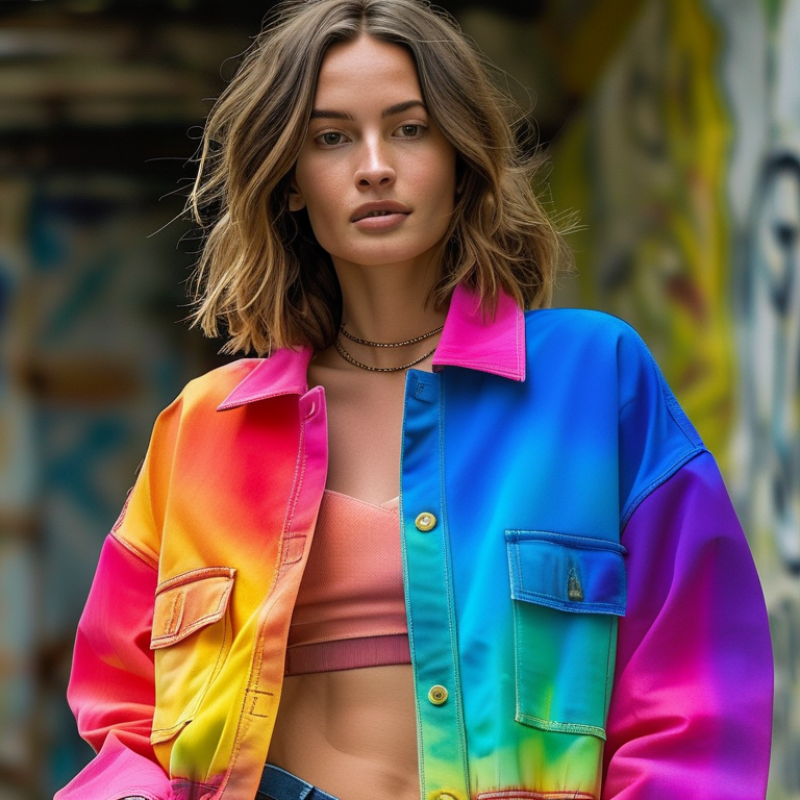
A dip dye jacket has a deliberate color transition. The fabric appears immersed in dye, creating a darker lower section and a lighter upper section. Its key feature is the gradual fade between two tones. This boundary may look soft, cloudy, or slightly uneven. That variation gives each jacket a more individual surface. The effect works best when the fabric absorbs color consistently. Cotton, denim, and canvas often show the transition clearly.
When inspecting a jacket, run your fingers across the dyed area. The texture should feel stable, not stiff or coated. Check the sleeves, seams, and pocket edges for balanced color movement. Uneven fading can be attractive, but harsh lines may suggest weak finishing.
I once chose a jacket with a beautiful front gradient, then noticed mismatched sleeves. It looked less refined than expected. Small details matter.
Consider how the colors interact with your existing clothes. A charcoal-to-black fade feels restrained, while pale blue with rust creates stronger contrast. Examine the collar and cuffs carefully. These areas receive frequent contact and may fade sooner. Wash the jacket according to its care instructions, preferably with similar colors. Avoid assuming every dip dye finish ages well. Some do. Some disappoint. A reliable choice combines clear color separation, comfortable construction, and a finish that still feels natural under close inspection.
7 Tips for Choosing a Dip Dye Jacket?
Material decides whether a dip-dyed gradient stays sharp or turns muddy. Textile Exchange’s Materials Market Report 2024 recorded 124 million tonnes of global fiber production in 2023. Polyester represented about 57%, while cotton accounted for 22%. Polyester generally resists fading and dries quickly, but it needs the correct dye system. Cotton absorbs dip dye beautifully, although repeated washing can soften the contrast. I have found that tightly woven fabric creates cleaner color boundaries than loose, fuzzy cloth.
Tip 1: Check the fiber label. Polyester suits longer-lasting color, while cotton offers stronger dye absorption. Tip 2: Avoid heavily brushed surfaces. Their raised fibers can make the gradient look uneven. Tip 3: Look for pre-tested fabric. A sample swatch reveals more than a product photograph.
AATCC TM61 evaluates accelerated laundering, and one test cycle is commonly treated as roughly five home washings. It is not a perfect prediction. Still, ask whether the jacket passed colorfastness testing. Tip 4: Seek results for washing and crocking, not only light exposure. Tip 5: Rub a pale cloth against the dyed area. Loose pigment is a warning sign. Tip 6: Inspect seams and cuffs, where dye often gathers. Tip 7: Choose a washable lining that will not bleed into the outer fabric. Cold washing helps, but it cannot rescue poor dye fixation. I sometimes prefer a slightly imperfect fade; it feels more honest, though less uniform.
| Tip | Material to Consider | Color Retention | Why It Works for Dip Dyeing | Suitable Dye Type | Durability and Care Notes | Best Use |
|---|---|---|---|---|---|---|
| 1Prioritize strong fiber-dye bonding | Polyester | Excellent | Polyester has low moisture absorbency, but its color can be highly wash-resistant when dyed correctly with heat. | Disperse dye with controlled high heat | Highly resistant to washing, abrasion, and fading. Avoid overheating finished garments because coatings, linings, and trims may be affected. | Outdoor-style or frequently washed jackets |
| 2Choose a fabric that accepts dye evenly | Nylon | Excellent | Nylon absorbs moisture better than polyester and generally accepts acid dyes evenly, making it suitable for controlled color gradients. | Acid dye with heat and an acidic dye bath | Good wash and abrasion resistance. Excessive heat can distort some lightweight nylon fabrics. | Lightweight windbreakers and durable fashion jackets |
| 3Select natural fibers for a softer hand feel | Cotton | Good | Cotton absorbs water-based dye readily and can create a rich, soft-looking dip-dye transition. | Fiber-reactive dye with salt and alkali | Color retention is good when properly fixed and washed, although direct sunlight and repeated laundering can gradually reduce brightness. | Casual canvas, denim, and lightweight cotton jackets |
| 4Match the dye to protein fibers | Wool | Good | Wool has chemical groups that bond well with acid dyes, allowing deep and attractive shades. | Acid dye in a mildly acidic bath | Use gentle movement and controlled temperatures to reduce felting, shrinkage, and distortion. Dry cleaning or careful hand washing may be required. | Warm, structured, or premium-feel jackets |
| 5Consider softness but check wet strength | Rayon or viscose | Moderate | Rayon absorbs dye easily and can produce vivid color, but its fibers become weaker when wet and may be less resistant to abrasion. | Fiber-reactive dye | Wash gently and avoid aggressive rubbing. Shrinkage, creasing, and color loss may be greater than with synthetic fibers. | Fashion jackets intended for occasional wear |
| 6Check whether the fabric needs a specialized process | Acrylic | Good | Acrylic can hold color well after dyeing, but it requires specialized dyes and carefully controlled heat because the fiber is heat-sensitive. | Basic or cationic dye formulated for acrylic | Good resistance to weathering and mildew. Avoid excessive heat from washing, ironing, or tumble drying. | Lightweight, knit, or cold-weather jacket panels |
| 7Inspect blends before committing to a gradient | Polyester-cotton blend | Moderate | Each fiber type requires a different dye system, so the final color may be heathered, uneven, or lighter on one component. | Two-stage dyeing using compatible dye classes | Usually durable, but the polyester and cotton portions may fade or absorb color at different rates. Test a hidden area first. | Workwear, casual jackets, and textured color effects |
Practical check: Before dip dyeing a finished jacket, test a concealed seam or fabric swatch. Zippers, thread, water-repellent finishes, linings, and trims may be made from different fibers and may not change color in the same way as the shell fabric.
A dip dye jacket should reflect your personal style before it follows a trend. The gradient is its strongest visual feature. Choose a soft fade for a quiet, refined wardrobe. Select a sharp color shift if your outfits feel expressive and energetic. A darker hem can add structure, while a lighter upper section keeps the face area fresh. Textile Exchange’s 2024 Materials Market Report estimates that polyester represented about 59% of global fiber production in 2023. Check the fabric content and care label carefully, because fiber choice affects texture, durability, and dye appearance.
Tip 1: Match the gradient’s contrast to your daily clothes. Low contrast works with tailored trousers and neutral layers. High contrast suits denim, boots, and playful accessories. I once chose a dramatic red-to-black fade, but it dominated every outfit. That was not entirely successful.
Tip 2: Consider where the color changes across your body. A fade near the shoulders draws attention upward. A darker lower section can create visual balance. Personal styling consultations often use proportion, contrast, and color temperature together. The Color Marketing Group’s annual color research also shows how emotional responses influence consumer color preferences. Still, trend reports cannot replace a mirror test. Wear the jacket with your usual shoes and one favorite shirt. Look at it outdoors, too. Artificial lighting can soften or distort the gradient. Choose the version that feels natural, even if it is slightly less fashionable.
A dip dye jacket should look interesting without making movement difficult. From fitting jackets in changing rooms, I have learned that small details matter.
They should sit close to your natural shoulder line.
The back should not pull sharply.
If it presses your stomach, choose a roomier cut. A stylish jacket is still a poor choice when breathing feels restricted.
Look for even stitching, secure buttons, and smooth zipper movement.
The gradient should appear intentional, not patchy or strangely faded. Rub a hidden section gently with a white cloth. Some colors may transfer, especially before the first wash. I once ignored this detail and regretted wearing a pale shirt underneath.
Soft lining, flexible cuffs, and useful pockets make a jacket easier to wear.
A jacket may feel perfect over a thin shirt but tight over knitwear. Check the fabric weight, too. Heavy material can become tiring during long commutes. I sometimes choose appearance over comfort, which is not always wise. Leave room for imperfect weather, changing temperatures, and ordinary daily movement.
7 Tips for Choosing a Dip Dye Jacket
Tip 1: Inspect the color in natural light. Dip dyeing should create a clear gradient without harsh bands, cloudy patches, or dull edges. A rich top layer may look attractive indoors but appear uneven near a window. Rub a hidden area gently with a white cloth. Any strong transfer deserves caution.
Tip 2: Evaluate the fabric and finish together. I prefer jackets with dense stitching, secure buttons, and a smooth inner surface. Color quality cannot rescue weak construction. Check whether the dye has soaked evenly around seams and pockets. Small irregularities can show handmade character, but excessive fading may indicate poor processing.
Tip 3: Read the care instructions before purchasing. Some dip dye jackets require cold washing, limited detergent, or professional cleaning. That extra care affects the real cost. I once chose a dramatic jacket without checking this detail, and its gradient changed after one careless wash. It looked different, not better.
Tip 4: Consider long-term value. Compare the price with fabric weight, lining quality, durability, and expected wear. A cheaper jacket may demand frequent replacement. A higher-priced option is not automatically wiser. Ask whether you would still wear the color after several seasons. Bright shades can become tiring.
Tip 5: Test comfort and practicality. Move your arms, sit down, and check pocket placement. A beautiful jacket that restricts movement often stays unused. Also examine the collar and cuffs for dye concentration, since these areas receive regular friction. Personal experience matters here, though it can be imperfect.
Evaluate color quality, care needs, durability, and overall value before buying.
The chart uses a practical 100-point buying framework: colorfastness and color contrast receive the highest weighting because they determine how well a dip-dye finish remains attractive over time. Care simplicity, fabric durability, versatility, repairability, and cost per wear complete the value assessment. Always check the garment care label and test color transfer before washing.
: It has a gradual color transition. The lower area usually looks darker. The upper area appears lighter. The boundary may look soft or uneven.
Cotton, denim, and canvas often absorb color visibly. Tightly woven fabric usually creates cleaner boundaries. Loose, fuzzy surfaces may look patchy.
Run your fingers over the dyed area. The fabric should feel stable, not stiff or coated. Check the sleeves, seams, cuffs, and pocket edges.
Not always. A gentle, cloudy fade can look individual. Harsh lines may indicate weak finishing. Inspect the whole jacket, not only the front.
Polyester usually resists fading and dries quickly. Cotton absorbs dye beautifully but may lose contrast after repeated washing. The fiber label gives useful clues.
Rub a pale cloth against the dyed section. Visible color transfer is a warning sign. Ask about washing and rubbing colorfastness results.
Low contrast suits neutral layers and tailored trousers. Strong contrast works with denim, boots, or vivid accessories. Try the jacket with your usual shoes.
A shoulder-level fade draws attention upward. A darker lower section can create visual balance. Try it in daylight, too. Indoor lighting can mislead.
Follow the care label carefully. Cold wash it with similar colors. Inspect the cuffs and collar after washing. A careful routine cannot repair poor dye fixation.
Not necessarily. A slightly imperfect fade may feel more natural. Still, mismatched sleeves can reduce refinement. I once overlooked that detail. I regretted it.
Choosing the right Dip Dye Jacket starts with understanding the dip dye effect: a gradual transition from one color to another, often creating a bold, artistic, and modern appearance. Consider how strong or subtle you want the gradient to be, and select a material that absorbs and maintains color evenly. Fabrics with a smooth, reliable texture can help the shades look clearer and more balanced over time.
Your personal style should guide the color combination and intensity. Before purchasing, check the jacket’s fit, stitching, closures, lining, and overall construction to ensure everyday comfort and durability. Pay attention to sleeve length, shoulder shape, and room for layering. Finally, examine the color quality and learn about the recommended cleaning method, since some dyed fabrics require gentle care. A thoughtful comparison of appearance, practicality, maintenance, and price will help you choose a Dip Dye Jacket that looks distinctive while remaining comfortable and valuable for regular wear.