Finding the right Acid Wash Jacket manufacturer requires more than comparing catalog photos. Denim shade, fabric weight, wash consistency, stitching, and finishing quality can change the final product significantly. A jacket may look impressive online, yet feel stiff, uneven, or poorly fitted in person.
This guide introduces established Acid Wash Jacket manufacturers and suppliers for brands, retailers, wholesalers, and private-label buyers. It examines production experience, material options, customization services, minimum order quantities, sampling procedures, and quality control practices. Reliable suppliers should explain their cotton blends, washing methods, size grading, lead times, and packaging standards clearly. They should also provide realistic samples before discussing large production runs.
Details matter here. Check the collar shape, metal hardware, seam strength, and color balance across panels. Ask whether each batch receives inspection before shipment. A supplier with documented procedures usually inspires greater confidence. Still, certifications and polished websites do not guarantee perfect performance.
Ask practical questions.
Can the factory repeat the same wash effect? Can it manage small orders? Does the sample match the approved specification? These answers reveal more than advertising language. Some manufacturers may offer attractive prices but lack dependable communication or after-sales support. Others may charge more while reducing quality risks.
This overview is designed to support careful supplier evaluation. It does not assume one factory suits every buyer. Production goals, budget, market position, and order volume all influence the best choice. Even experienced buyers should test samples, review terms, and reconsider assumptions before committing. That cautious process can protect product quality and build a more dependable supply relationship.
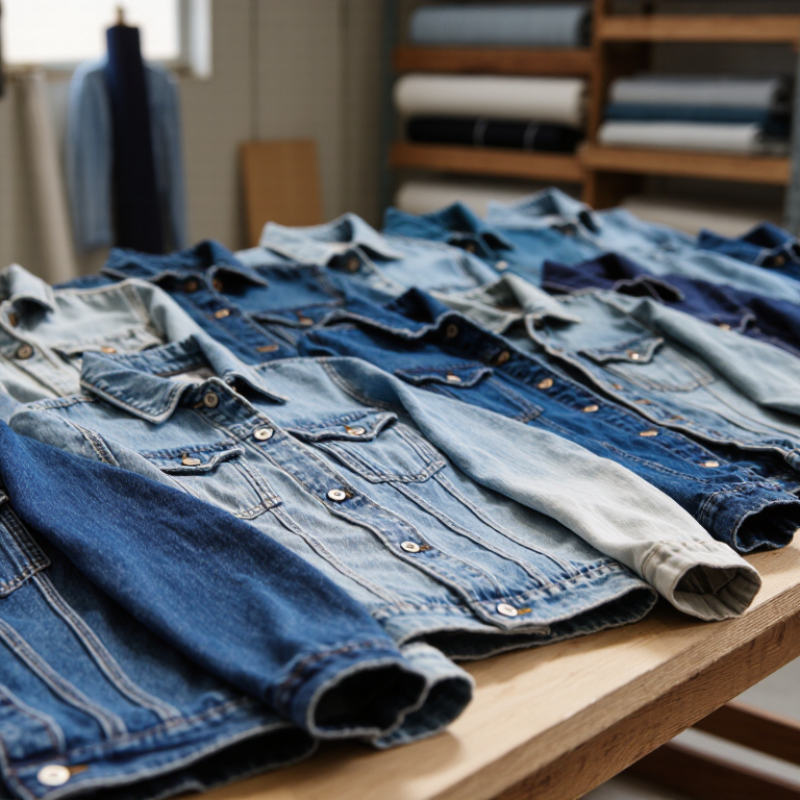
Top Acid Wash Jacket Manufacturers and Suppliers
Acid-wash jacket performance starts with the denim specification. An 8 oz fabric weighs about 271 GSM, while 14 oz reaches approximately 475 GSM. The difference is noticeable in the hand, drape, and finished garment weight. Lighter denim suits transitional jackets and layered styling. Heavier denim offers structure, warmth, and stronger abrasion resistance. However, excessive weight can make acid washing uneven.
Most reliable suppliers identify fiber content clearly. A common base is 100% cotton, valued for its dry touch and authentic fading. Cotton-polyester blends can improve dimensional stability and reduce wrinkling. A small elastane percentage, often 1–3%, adds comfort without making the jacket look overly stretchy. Recycled fibers may support sourcing goals, but their performance must be tested rather than assumed.
GSM alone does not determine quality. It matters.
During sample review, inspect the inside seams, pocket corners, and collar edges. These areas often reveal weak yarns or aggressive washing. A 12 oz sample may feel premium, yet shrink more than expected after finishing. Pre-wash measurements should include chest width, sleeve length, and body length. Suppliers should provide fiber percentages, fabric weight, shrinkage data, and colorfastness results. Acid effects also vary with moisture, chemicals, tumbling time, and temperature. Small process changes can create large shade differences. I would not approve bulk production from a single jacket sample. More testing is safer, although it can slow decisions.
Request a trial MOQ of 100–300 pieces. Confirm whether it applies per color, size range, and wash effect. A low unit price can still create excess inventory.
A practical sample lead time is 7–14 days. This includes fabric sourcing, washing, labeling, and courier delivery. Keep one approved reference jacket. It prevents avoidable arguments.
Ask for recent production records and current order loading. Review sewing-line numbers and washing-machine capacity. Large capacity may mean less attention. That detail is easy to miss.
Divide the schedule into fabric booking, sampling, cutting, washing, inspection, and shipment. Confirm when the delivery clock begins. It may start after deposit, sample approval, or fabric arrival. Leave time for re-washing rejected panels.
Request weekly progress photos and written milestones. Arrange a pre-shipment inspection before goods leave. Delivery promises sound precise. They are not always reliable.
Test the fabric extract within pH 4.0–7.5. Test bulk fabric, not only a showroom swatch. A small swatch can hide uneven treatment. Skin comfort still needs practical checking.
Check washing, dry rubbing, wet rubbing, perspiration, and light exposure. Rub dark panels with a white cloth. Record the transfer level, test method, and date. Loose dye may stain pale shirts.
Measure jacket panels before and after laundering. Check sleeves and body length separately. A below-three-percent target may be useful, but the buyer specification controls. Record lengthwise and widthwise changes. Weigh several conditioned samples and report prewash and postwash GSM. One reading is not enough.
Choosing the right Acid Wash Jacket manufacturer requires careful evaluation of materials, processing methods, quality standards, and compliance capabilities. Reliable suppliers should offer durable 8–14 oz denim, clearly state GSM specifications, and explain their fiber blends, including cotton and responsibly selected synthetic components. Their acid-wash process may involve enzymes, pumice, ozone, or reduced-water techniques, supported by measurable water-use data and consistent shade control. Buyers should also review MOQ requirements, sample lead times, production capacity, and the ability to meet a realistic 30–60-day delivery schedule.
Quality screening should include fabric pH within 4.0–7.5, tested colorfastness, controlled shrinkage, and verified GSM accuracy. Compliance documentation is equally important: OEKO-TEX and REACH-related records can support material safety, while ISO 9001 indicates structured quality management. Higg FEM data may provide additional insight into environmental performance, resource use, and facility practices. A transparent supplier that shares test reports, production details, and corrective-action procedures is better positioned to deliver consistent Acid Wash Jacket collections.

 Jinmao