
China Top Burn Out Jacket Manufacturers for Global Buyers?

Time:2026-09-20 Author:Madeline
0%

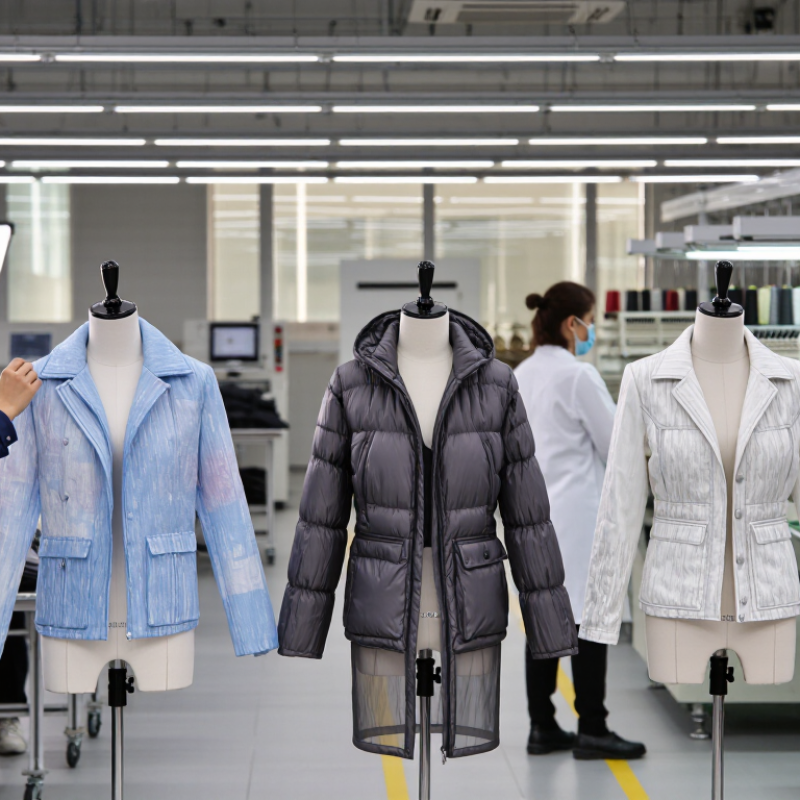
China has become a major sourcing base for Burn Out Jacket production. Its factories combine textile finishing, garment assembly, embroidery, and export coordination. Buyers can find suppliers for lightweight fashion jackets, winter layers, and custom private-label collections.

However, factory selection requires more than comparing prices. A reliable manufacturer should explain its burn-out treatment, fabric composition, shrinkage control, and color stability. Ask for production samples. Inspect the raised and transparent areas closely. Uneven patterns can appear under strong showroom lighting. They may look acceptable in photographs but fail during retail inspection.

Dr. Thomas Gries, a respected textile engineering specialist, emphasizes a practical sourcing principle: “Performance depends on controlling every stage, not only choosing attractive materials.” This idea matters when evaluating a Burn Out Jacket supplier. The treatment must remain visually consistent after washing, pressing, and packing. Seam strength also deserves attention. A beautiful surface cannot compensate for weak cuffs or distorted panels.

Many Chinese manufacturers offer flexible minimum order quantities and helpful sample development. Still, buyers should verify factory experience instead of trusting polished websites alone. Request test reports, factory videos, measurement charts, and references from comparable orders. Ask uncomfortable questions. That is often where reliability becomes visible.

This guide examines leading China Top Burn Out Jacket Manufacturers for Global Buyers. It considers fabric knowledge, finishing accuracy, communication, inspection practices, production capacity, and export readiness. No supplier is perfect. Even experienced buyers can overlook small defects when deadlines become tight. Careful verification remains the safer path.

China Top Burn Out Jacket Manufacturers for Global Buyers?

Define Burnout Jackets by Fiber Contrast, GSM, and ISO 6330 Care Tests

Burnout jackets are defined by contrast, not decoration alone. One fiber is removed or weakened, revealing a transparent pattern against the remaining structure. Cotton, rayon, polyester, and blended yarns can react differently during production. That difference controls softness, opacity, strength, and visual depth. Buyers should request fiber percentages and a clear burnout process description.

GSM gives the jacket measurable substance. It records fabric weight per square meter, helping buyers compare samples from Chinese manufacturers and other suppliers. A 180 GSM shell may feel light, while a 300 GSM version offers more body and warmth. However, GSM alone cannot predict durability. Placement of burnout areas matters. Thin sections near seams may distort after washing. This is where factory experience becomes visible.

ISO 6330 care tests use specified domestic washing and drying procedures. They help assess shrinkage, color change, surface damage, and shape retention under controlled conditions. Ask for the exact method, temperature, detergent, drying cycle, and number of washes. A single wash is weak evidence. Five cycles reveal more. Test reports should match the submitted production sample, not an improved showroom piece. That distinction is often overlooked.

Even careful sourcing has gaps; lab results cannot fully predict every household’s handling. Keep a retained sample for comparison. A practical check.

Assess China’s Market Scale Through 2024 Textile-Apparel Exports Above US$300B

China’s textile and apparel exports exceeded US$300 billion in 2024, showing the country’s continuing manufacturing depth. This scale supports buyers seeking burn-out jackets, from sampling rooms to high-volume production lines. It also reflects a dense network of fabric mills, dyeing facilities, trim suppliers, and garment factories.

A qualified manufacturer should explain its burn-out process clearly. Ask about fiber composition, discharge control, colorfastness, shrinkage, and seam strength. Request recent test reports and production samples. A jacket may look striking under showroom lights, yet fail after washing. That happens.

Experience matters on the factory floor. Reliable teams usually document pre-production approval, inline inspection, and final measurement checks. Buyers should also review worker safety practices, wastewater controls, and material traceability. These details help turn export capacity into dependable supply.

The US$300 billion figure is powerful, but it is not proof of every supplier’s ability. Large national exports can hide uneven factory performance. I would compare at least three manufacturers, visit one facility when possible, and confirm capacity during peak seasons. My own caution is simple: low prices can reflect efficiency, but they can also conceal weak quality control._天天

Screen Manufacturers by MOQ, AQL 2.5, Capacity, and Export Lead Times

China’s burn-out jacket manufacturers vary sharply in MOQ, quality control, and export speed. A practical buyer should request the MOQ for each color, size range, and fabric combination. Some factories accept 300 pieces for sampling, while production MOQs may reach 1,000 pieces per style. Confirm whether mixed sizes count toward the total.

AQL 2.5 should appear in the purchase agreement, not only in an email. Ask for the inspection level, defect classification, measurement tolerance, and corrective-action process. For burn-out fabrics, inspect print clarity, seam strength, color consistency, and areas weakened by chemical treatment. Request a pre-production sample and a final inspection report. Photos help, but they cannot replace physical testing.

Capacity must be checked against the factory’s active orders. Ask for monthly output, cutting-line numbers, sewing-line allocation, and peak-season schedules. Export lead times commonly depend on fabric availability, approvals, inspection, and port booking. A realistic timeline may include 7–15 days for material preparation, 25–40 days for production, and additional time for export handling. Confirm the nearest loading port and shipping documents early.

Small details matter. Really matter. I would also request recent production records and evidence of previous export experience. A factory may promise fast delivery, yet lack enough skilled operators during busy months. My screening process is not perfect; capacity figures can change quickly. Recheck them before placing a deposit.

China Top Burn Out Jacket Manufacturers for Global Buyers? - Screen Manufacturers by MOQ, AQL 2.5, Capacity, and Export Lead Times
Anonymous Manufacturer Profile Typical Product Focus MOQ per Style / Color Quality Standard Monthly Capacity Sample Lead Time Bulk Production Lead Time Export Readiness Buyer Screening Notes
Profile A — Mid-size outerwear factory Lightweight burnout-effect jackets, casual woven outerwear, unlined styles 300–500 pcs AQL 2.5 for major defects; AQL 4.0 for minor defects; final inspection recommended 20,000–35,000 pcs 7–10 days 45–60 days Experienced with standard export documentation and carton packing Suitable for fashion programs with moderate volumes; confirm burnout fabric shrinkage before bulk approval.
Profile B — High-volume woven garment facility Burnout denim jackets, cotton-blend jackets, workwear-inspired outerwear 800–1,200 pcs AQL 2.5 inspection level; inline and final quality checks required 50,000–80,000 pcs 10–14 days 55–75 days Suitable for containerized export orders and repeat seasonal programs Best suited to buyers prioritizing capacity; verify production allocation during peak spring and autumn seasons.
Profile C — Small-batch fashion manufacturer Trend-led burnout jackets, printed overlays, lightweight fashion silhouettes 100–300 pcs AQL 2.5 available by buyer request; pre-production sample approval required 8,000–15,000 pcs 5–8 days 35–50 days Suitable for small export orders; freight and consolidation planning may be needed Useful for testing new designs; confirm fabric sourcing, color consistency, and re-order capacity.
Profile D — Technical outerwear producer Water-repellent burnout-look jackets, laminated fabrics, functional casualwear 500–1,000 pcs AQL 2.5 for major defects; performance testing should be specified separately 25,000–45,000 pcs 12–18 days 60–80 days Capable of export packing, labeling, and documentation subject to buyer instructions Confirm coating durability, hydrostatic pressure, seam performance, and care-label compliance.
Profile E — Vertical textile and garment supplier Burnout fabrics, dyed jackets, coordinated tops and outerwear collections 500–800 pcs AQL 2.5 final inspection; fabric inspection and shade-band approval recommended 30,000–55,000 pcs 10–15 days 50–70 days Potential advantage when fabric development and garment production are sourced together Ask for fabric test reports, colorfastness results, and written confirmation of reserved greige-fabric capacity.
Profile F — Private-label export factory Private-label casual jackets, seasonal fashion collections, basic burnout treatments 300–600 pcs AQL 2.5 inspection supported; buyer-approved measurement tolerance required 15,000–30,000 pcs 7–12 days 45–65 days Familiar with custom labels, packaging specifications, and commercial invoices Confirm compliance with destination-market labeling, fiber-content, and flammability requirements.
Profile G — Sample-development specialist Complex panel construction, embroidery, laser effects, and decorative burnout details 50–150 pcs AQL 2.5 can be applied to bulk orders; sample comments must be documented 5,000–12,000 pcs 4–7 days 40–55 days Well suited to development orders and limited collections Check whether decorative processes are performed in-house or subcontracted and request process-control records.
Profile H — Large integrated apparel manufacturer Structured burnout jackets, padded seasonal outerwear, multi-category programs 1,000–2,000 pcs AQL 2.5 final inspection with documented corrective-action procedures 80,000–120,000 pcs 14–21 days 65–90 days Designed for larger export programs with formal production planning Confirm minimum order requirements, production-line assignment, testing scope, and shipment booking windows.

Screening note: MOQ, capacity, lead time, and AQL figures are practical benchmark ranges for anonymous China-based apparel supplier profiles rather than named-company claims. Buyers should validate each figure through a factory audit, approved sample, signed purchase specifications, independent inspection, and destination-market compliance testing before placing an order.

Verify Burnout Processing Under REACH and OEKO-TEX STANDARD 100

China Top Burn Out Jacket Manufacturers for Global Buyers?

Burnout processing can create sharp, transparent patterns on jacket fabrics. The effect usually comes from selectively removing cellulose fibers in a blended material. This chemical step needs close control, not attractive samples alone. Ask manufacturers for the fabric composition, processing chemicals, safety data sheets, and batch records. Small changes in concentration or heating can alter both appearance and chemical performance.

REACH checks matter before bulk production. Buyers should request current laboratory reports covering restricted substances and relevant SVHC communication duties. Reports must match the exact fabric, color, and production batch. A generic certificate proves very little.

OEKO-TEX STANDARD 100 testing adds another useful layer. Confirm the correct product class, valid certificate scope, and tested component list, including lining, thread, labels, prints, and trims. The jacket is tested as a product, not merely as a fabric story.

Walk through the processing area when possible. Look for labeled containers, controlled chemical storage, ventilation, wastewater procedures, and retained samples. Ask how rejected panels are isolated. A reliable supplier should explain these details without hesitation. I have found that clear records often reveal more than polished presentations. Still, no audit is perfect. Test results can become outdated, and production pressure may change a familiar process. Independent pre-shipment testing remains sensible, especially for children’s products or direct-skin contact styles. Performance also deserves attention: burnout areas may tear during zipper installation, washing, or repeated bending. Compliance and durability must be checked together.

Rank Suppliers Using Cost, Compliance, Capacity, and 2024 Performance KPIs

For global buyers, China’s burn-out jacket suppliers should be ranked with evidence, not showroom impressions. A practical scorecard combines unit cost, compliance, production capacity, and 2024 performance KPIs. Request comparable quotes for one jacket, including fabric weight, burn-out area, lining, trims, packing, and shipping terms. Cost matters, but the lowest offer may hide rework, weak inspection, or unstable fabric yield. Keep that risk visible.

Compliance checks should cover restricted-substance testing, worker-safety records, wastewater controls, and traceable material documents. Ask for recent laboratory reports and audit dates. Verify whether they match the actual factory. Capacity needs a different test. Compare monthly output, sewing lines, burn-out equipment, peak-season utilization, and backup processes. A supplier claiming 50,000 pieces monthly should show production records, not only a polished capacity sheet. Visit evidence helps, although one visit never proves everything.

Use 2024 KPIs to separate reliable performance from attractive promises: on-time delivery, first-pass quality, defect rate, sample approval time, order-fill rate, and complaint closure days. Weight each KPI against your product risk. For delicate burn-out panels, quality and shade consistency may deserve more weight than price. A simple ranking can score cost at 25%, compliance at 25%, capacity at 20%, and 2024 performance at 30%. These percentages are not universal. Recheck them after pilot orders, because real production often exposes assumptions that spreadsheets miss.

This anonymous supplier benchmark compares four procurement dimensions on a 0–100 index. Cost competitiveness is based on relative FOB pricing, compliance reflects audit and certification readiness, capacity represents scalable annual output, and 2024 performance measures delivery reliability and production consistency. The scores are composite benchmarks for supplier screening rather than disclosed company-specific results.

FAQS

What does China’s 2024 textile-apparel export scale suggest about burn-out jacket sourcing?

Exports above US$300 billion indicate deep manufacturing capacity. Buyers may access fabric mills, dyeing facilities, trims, and garment lines. Scale alone proves little. Factory-level checks still matter.

How should I verify burn-out fabric quality?

Ask about fiber composition, discharge control, colorfastness, shrinkage, and seam strength. Request recent test reports and production samples. Wash the jacket. Showroom lighting can hide failures.

What MOQ details should I confirm?

Confirm the MOQ for each color, size range, and fabric combination. Ask whether mixed sizes count toward the total. Sampling may start near 300 pieces, while production can reach 1,000 pieces per style. Figures vary.

How can I use AQL 2.5 effectively?

Place AQL 2.5 requirements in the purchase agreement. Define inspection levels, defect categories, measurement tolerances, and corrective actions. Inspect print clarity, weakened panels, seams, and shade consistency. Photos help, but physical testing is stronger.

How should I evaluate a factory’s production capacity?

Request monthly output, cutting-line numbers, sewing-line allocation, and active-order details. Check peak-season staffing and backup processes. A capacity sheet is not enough. Recheck figures before paying a deposit.

What export lead time is realistic for burn-out jackets?

Material preparation may take 7–15 days. Production may require 25–40 days. Add time for approvals, inspection, port booking, and shipping documents. Fabric delays can quietly extend the schedule.

Which compliance documents should a supplier provide?

Request restricted-substance test reports, worker-safety records, wastewater controls, and material-traceability documents. Confirm the reports match the actual factory. One audit is useful, but not complete proof.

How can I rank several manufacturers fairly?

Compare unit cost, compliance, capacity, and 2024 performance KPIs. Review delivery punctuality, first-pass quality, defect rates, approval speed, and complaint closure. A possible weighting is cost 25%, compliance 25%, capacity 20%, and performance 30%. These percentages are not universal.

Should I trust the lowest quotation?

Not automatically. A low price may reflect efficiency, but it may also conceal weak inspection or unstable fabric yield. Compare at least three suppliers. Use a pilot order. My scorecard remains imperfect, because real production often challenges spreadsheet assumptions.

Conclusion

Choosing the right Burn Out Jacket manufacturer requires more than comparing prices. This guide explains how to evaluate burnout fabrics through fiber contrast, fabric weight in GSM, surface clarity, durability, and ISO 6330 care-test performance. It also places China’s manufacturing strength in context by examining textile and apparel exports exceeding US$300 billion in 2024, helping global buyers understand the depth of the available supply base.

A practical supplier-screening process should compare minimum order quantities, AQL 2.5 quality targets, production capacity, sampling procedures, and export lead times. Buyers should also verify that burnout processing, dyes, trims, and finished garments meet REACH requirements and OEKO-TEX STANDARD 100 expectations. The final supplier ranking can combine landed cost, compliance documentation, production reliability, capacity, delivery performance, and relevant 2024 KPIs, enabling importers to select consistent partners for quality-focused, scalable jacket programs.

Madeline

Madeline

Madeline is a dedicated marketing professional with a wealth of expertise in our company's core offerings. With a keen understanding of the industry, she brings a unique perspective to her role, consistently delivering high-quality content that highlights the superior aspects of our products. As......