Global buyers are rethinking how they source practical outerwear. A Full Zip Jacket now serves commuting, training, travel, and layered workwear. Its value depends on more than fabric weight or attractive photography. Buyers must examine construction, compliance, lead times, and after-sales communication.
The Textile Exchange Materials Market Report 2024 estimates that global fiber production reached 124 million tonnes in 2023. It may approach 160 million tonnes by 2030. This pressure makes recycled content, traceability, and responsible sourcing increasingly important. Meanwhile, The State of Fashion 2025, published by McKinsey and The Business of Fashion, describes a cautious market with limited growth and demanding consumers. Suppliers must therefore offer dependable quality without creating unnecessary cost.
This guide introduces seven Full Zip Jacket suppliers for international buyers. The selection considers factory experience, material options, sample control, production capacity, certifications, and export support. A reliable supplier should explain fabric composition clearly, provide measurable size charts, and show real production details. Stitch density matters. So do zipper testing, seam finishing, and carton protection during shipment.
No supplier list is flawless. Product quality can vary between seasons, factories, and order volumes. A strong website proves little by itself. Buyers should request current certificates, pre-production samples, inspection records, and transparent payment terms. The World Bank’s Logistics Performance Index 2023 also reminds us that customs, infrastructure, and delivery reliability influence sourcing outcomes. These suppliers deserve closer review, not blind approval. Careful verification remains the buyer’s responsibility.
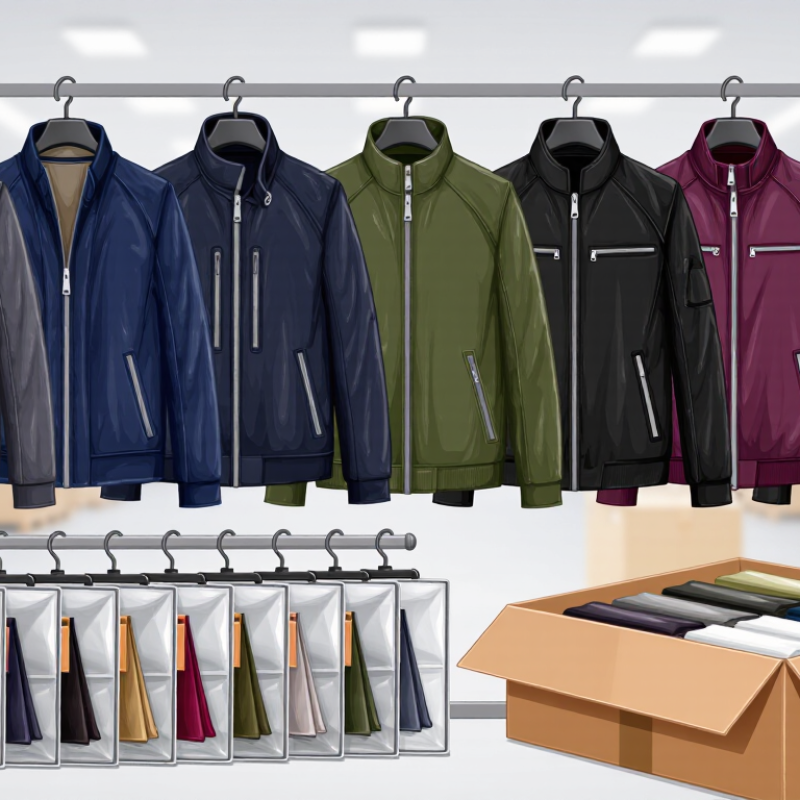
What to Look for in a Full Zip Jacket Supplier
A reliable full zip jacket supplier should show more than polished samples. Ask for fabric composition, weight, zipper specifications, size tolerances, and written inspection procedures. Request a preproduction sample, then check the zipper after repeated opening and closing. Test seams, pocket placement, and fit across several sizes. Small details matter. Confirm minimum order quantities, production timelines, and how defects are handled before approving a bulk order. A low quote can hide costly compromises.
Material choices deserve scrutiny. Textile Exchange’s Materials Market Report 2024 estimates that global fiber production reached 124 million tonnes in 2023, with polyester representing about 57 percent. This scale makes fiber traceability and recycled-content claims worth verifying. Ask suppliers for documentation that matches the fabric in your order, not a generic sustainability statement. Also check whether color, hand feel, and performance remain consistent between sample and production. They may not.
Tips: Send a clear tech pack with garment measurements, zipper length, fabric weight, and seam details. Ask for inspection photos and a dated production sample. Compare suppliers using the same specifications. Keep a little room for improvement; even a careful checklist cannot predict every fit issue. Better suppliers will explain what they can verify, flag limitations, and respond clearly when something changes.
This comparison uses supplier types rather than company names. It is a buyer-screening framework, not a verified ranking of specific manufacturers. Capabilities, minimum order quantities, lead times, certifications, and prices vary by factory and project; confirm them directly before placing an order.
| Supplier Type | Best Fit | Typical Product Strengths | Key Checks for Full Zip Jackets | Order & Development Considerations | Potential Trade-Off | Buyer Due-Diligence Documents |
|---|---|---|---|---|---|---|
| Performance Activewear Factory | Brands developing training, running, or outdoor mid-layer jackets | Technical knits, stretch panels, moisture-management fabrics, and performance-focused construction | Test zipper operation, seam strength, stretch recovery, fabric pilling, and wash durability on a complete garment | Ask whether the factory can develop custom patterns, trims, and fabric finishes; confirm sample and bulk schedules in writing | Specialized fabrics and testing may increase development time or cost | Material specifications, test reports for the exact fabric, sample approval record, and quality-control plan |
| Fleece and Knitwear Specialist | Buyers sourcing fleece, jersey, or brushed knit full-zip styles | Knowledge of knit fabrics, fleece weights, brushing, rib trims, and knit garment construction | Check shrinkage, spirality, pilling, colorfastness, and whether the zipper tape and garment fabric remain aligned after washing | Request fabric swatches and a pre-production sample made with the intended fabric and zipper | May have fewer options for woven shells or highly technical waterproof construction | Fabric composition and weight details, care-label information, applicable test results, and approved sample |
| Outdoor Shell Garment Manufacturer | Buyers seeking wind-resistant, water-resistant, or layered full-zip jackets | Shell fabrics, lining systems, adjustable features, and construction for changing weather conditions | Verify the claimed water-resistance or waterproof performance with test methods relevant to the finished garment; inspect zipper protection and seam construction | Clarify whether testing applies to the fabric, seams, or finished jacket, and agree on the exact performance specification | More complex construction and testing can add cost and extend sampling | Fabric performance reports, seam or finished-garment test reports where applicable, and written construction specifications |
| Private-Label Apparel Manufacturer | Retailers and brands needing custom labels, packaging, and coordinated product details | Private-label trims, care labels, hangtags, packaging, and customization support | Confirm zipper puller options, branding methods, label placement, artwork approval, and traceability of customized components | Ask for a clear breakdown of setup charges, customization limits, order minimums, and repeat-order requirements | Customization can require approvals and minimums for individual trims or packaging | Artwork approvals, trim specifications, labeling requirements, packing instructions, and order terms |
| Small-Batch Development Workshop | Start-ups, capsule collections, and buyers validating a new jacket design | Design iteration, prototypes, pattern adjustments, and smaller development runs | Assess sample workmanship, fit consistency, grading capability, zipper sourcing, and the process for moving from samples to repeatable production | Separate prototype costs from bulk pricing and establish how approved patterns and specifications will be retained | Unit costs may be higher, and large-scale production capacity may be limited | Approved patterns, measurement specification, sample comments, and a documented production-readiness review |
| Large-Scale Cut-and-Sew Manufacturer | Established buyers planning repeat or higher-volume programs | Production-line capacity, standardized operations, and potential support for repeat orders | Check line experience with the jacket’s fabric and zipper, in-line inspection procedures, defect handling, and capacity allocation | Confirm minimum order quantities, production slots, size and color breakdown rules, and shipment milestones | May be less flexible for frequent design changes or very small initial orders | Factory profile, capacity plan, quality manual, production schedule, and agreed inspection criteria |
| Certified or Compliance-Focused Manufacturer | Buyers with defined social-compliance, restricted-substance, or supply-chain requirements | Potentially structured audit, chemical-management, and traceability processes, depending on the facility and scope | Verify certificate holder, site address, scope, validity dates, and whether the relevant process and product are covered | Provide compliance requirements before sampling and confirm which records can be supplied for each production order | Certification or audit status does not by itself guarantee product quality or legal compliance in every market | Current audit or certificate records, scope details, material declarations, and applicable product test reports |
Ask for fabric composition, weight, zipper specifications, size tolerances, and written inspection procedures.
Open and close the zipper repeatedly. Inspect the seams, pocket placement, and fit across several sizes.
Yes. Request a sample using the same fabric and trims planned for the order. Wash it before approval.
Request records tied to the specific fabric in your order. Generic sustainability statements are not enough.
Provide garment measurements, zipper length, fabric weight, and seam details. Clear instructions reduce avoidable confusion.
Compare lead times, communication, capacity, traceability, and quality procedures using the same specifications.
No. A quick reply is useful, but it cannot confirm consistent production or dependable delivery.
Confirm quantities, payment milestones, packaging, sample approval, production updates, and remedies for defects in writing.
Keep one approved sample as a reference. Check production color and measurements against it, though small differences may remain.
Choosing the right Full Zip Jacket supplier starts with assessing product expertise, fabric options, stitching, fit, and communication. Compare potential suppliers on consistent quality, transparent pricing, minimum order quantities, lead times, and customization capabilities, including colors, materials, sizing, and design details. A clear comparison helps buyers balance cost with durability and service rather than choosing on price alone.
Before placing an order, request samples to check workmanship and confirm that the finished product matches specifications. Review relevant certifications, verify production capacity, and discuss quality-control procedures and delivery schedules. Global buyers should also clarify payment terms, shipping arrangements, and how changes or issues will be handled. By checking these details and comparing suppliers against their business needs, buyers can select a dependable partner and place an order with greater confidence.

 Jinmao