A Waffle Top Jacket is designed for comfort, light warmth, and practical layering. Its raised, grid-like knit gives the fabric a soft texture and helps create small pockets of air. That structure can feel cozy without making the jacket as heavy as a thick fleece layer. It is not a substitute for a weatherproof shell, though. A chilly breeze can still pass through some waffle-knit fabrics.
The jacket works well over a T-shirt on a cool morning, or beneath a coat when temperatures drop. Picture a breathable layer for a walk, a relaxed commute, or time spent indoors where a bulky sweater feels excessive. Fit and fabric matter. A cotton-rich version may feel soft against the skin, while a stretch blend can allow easier movement. Check the care label, too; some knits may shrink or lose shape with rough washing.
Apparel product developer Elena Park is a fictional expert voice created for this introduction, not a verified industry source. Her illustrative line captures the practical idea: “Choose the waffle layer for comfort, not as your only shield from the weather.” A useful reminder. The best choice depends on your climate, activity, and preferred fit. And the knit is not magic. Understanding what a Waffle Top Jacket can—and cannot—do makes it easier to decide when this textured layer belongs in your wardrobe.
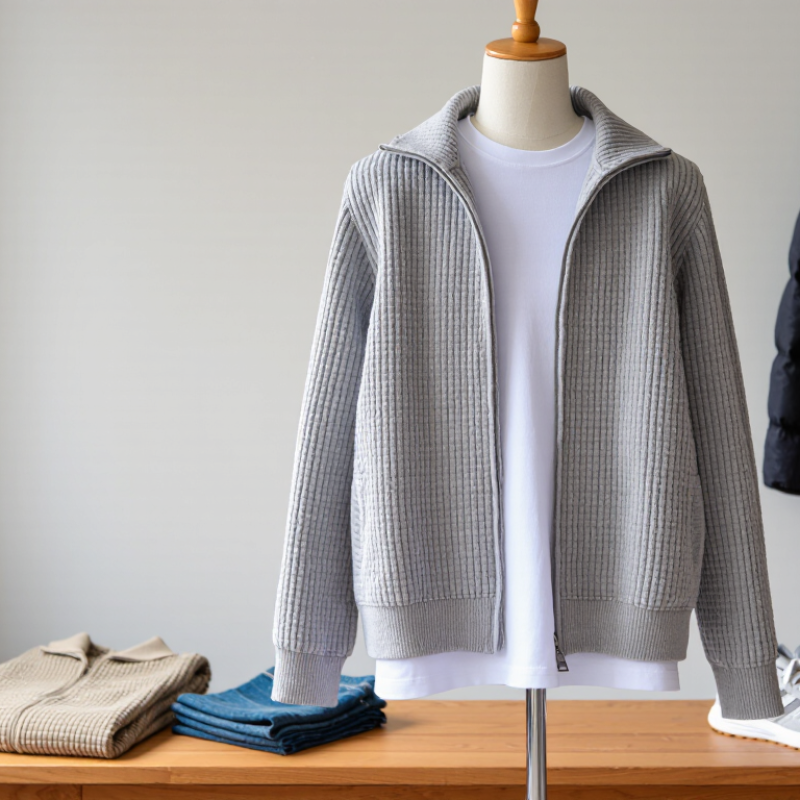
A waffle top jacket is defined more by its fabric than by a fixed jacket design. Its surface has raised squares or cells separated by recessed channels, creating a grid-like texture you can feel under your fingertips. The fabric may be knitted or woven, and “waffle top jacket” is not a universally standardized garment category. The label can be confusing. In practice, it often describes a lightweight layer worn over a shirt or beneath a weather-resistant shell.
Those small fabric pockets can hold still air, helping reduce heat loss, but they do not make every waffle jacket equally warm. Fiber type, fabric weight, fit, and wind protection all matter. A loose grid may feel breathable indoors yet let chilly air through outside. Check the garment’s fiber content and construction, not just its texture.
Textile Exchange’s Materials Market Report 2024 estimates global fiber production reached 124 million tonnes in 2023 and could reach 160 million tonnes by 2030. That scale reflects how varied textile choices are, so the word “waffle” alone cannot tell you a jacket’s performance. For a more technical comparison, fabric tests such as ASTM D737 assess air permeability. Real wear still matters. A damp, close-fitting layer may feel colder than expected.
What Is a Waffle Top Jacket Used For?
How Its Textured Fabric Helps Retain Warmth
A waffle top jacket is a light layer for cool mornings, indoor drafts, and low-effort outdoor activities. Its raised grid creates small pockets that can hold still air near the body. That trapped air slows heat loss, while the fabric remains more flexible than many bulky fleece layers. The texture helps, but it is not magic. Wind can pass through, and damp fabric may feel colder against the skin.
A useful measure is clothing insulation. The ASHRAE Handbook—Fundamentals defines one clo as 0.155 m²·K/W, a standard unit for comparing thermal resistance. This figure describes insulation, not the performance of every waffle jacket. ASTM F1291 sets out a thermal-manikin method for measuring the insulation of clothing ensembles, which is why a jacket’s actual warmth depends on fit and layers underneath. A close-fitting base layer can limit drafts; a shell can help in windy weather. Check the fabric weight and care label, too. Small details matter. I would not assume that a deeper waffle pattern always means more warmth; construction and fit can change the result.
| Use or Feature | How It Works | Best Conditions | Practical Limitation |
|---|---|---|---|
| Everyday layering | The raised grid texture creates small pockets that can hold still air, helping reduce heat loss when worn close to the body. | Cool indoor spaces, mild outdoor weather, and changing temperatures. | Warmth depends on fabric weight, fit, and what is worn over or under it. |
| A midlayer for outdoor activities | A waffle-knit layer adds insulation beneath a shell or another outer layer without necessarily being as bulky as a heavy jacket. | Walking, camping, or other activities in cool conditions when a protective outer layer is available. | The knit texture alone does not guarantee windproof or waterproof protection. |
| Comfort during light activity | Many waffle fabrics are knitted to allow some airflow; fabric composition and construction determine how quickly moisture moves or dries. | Casual movement in cool weather, depending on the garment’s fabric and fit. | Breathability and moisture management vary; cotton versions may dry more slowly than some synthetic fabrics. |
| Casual standalone wear | The textured surface provides a relaxed look and light coverage when a full outer coat is unnecessary. | Mild, dry weather or comfortable indoor settings. | A lightweight waffle top may not provide enough insulation in cold, exposed, or windy conditions. |
| Choosing the right warmth | A denser or heavier fabric generally offers more insulation than a thin, open knit, while added layers can increase warmth. | Select based on expected temperature, activity level, and whether a shell or base layer will be worn. | “Waffle” describes a textured construction, not one fixed warmth rating or fabric composition. |
A waffle top jacket is most useful when the weather feels cool but not truly cold. Its raised, grid-like knit traps a little air, adding warmth without the bulk of a heavy coat. Wear it over a T-shirt on a brisk morning walk, during a drafty commute, or while moving between a warm home and a cooler outdoors. The textured fabric also makes a simple outfit feel more substantial. Handy, but not magic.
It works especially well in mild, changeable weather: think a shaded patio, a breezy office, or an autumn afternoon when temperatures dip after sunset. Choose a comfortable layer underneath, and check the fabric weight before relying on it for warmth. A thin waffle jacket may feel pleasant indoors but offer little protection against strong wind. Not in a downpour. Most are not designed as rain shells, either, so a separate waterproof layer is sensible when showers are expected. One small drawback: the textured surface can catch on rough bags or furniture, and some knits feel warmer than they look. The best use is as an easy middle layer, not a substitute for serious cold-weather gear.
A waffle top jacket is most useful as a breathable middle layer when temperatures shift during the day. Its raised texture holds small pockets of air, adding warmth without the bulk of a heavy coat. Wear it over a light base layer on a cool walk, then add a wind-resistant shell when gusts pick up. The National Weather Service wind-chill chart shows why: at 30°F with 20 mph winds, the apparent temperature is about 17°F. That changes the layering choice. A waffle jacket alone may feel fine beside a sheltered doorway, then chilly on an exposed path.
Keep the layers adjustable. Open the jacket or remove the shell during a brisk climb; close them again when you stop. Damp fabric can undermine the setup, so avoid overdressing under your pack or while working hard. NIOSH’s Cold Stress guidance notes that hypothermia can occur above 40°F when rain, sweat, or cold water chills the body. Dryness matters. A shell helps in wind and light precipitation, but a waffle top is not a waterproof layer. Check the forecast, carry a thin extra layer, and notice how your body feels rather than relying on a fixed outfit. I sometimes misjudge the warmth needed after sunset; a spare layer is less elegant, but useful.
What to Consider When Choosing One
A waffle top jacket is a useful light layer, but the right choice depends on where and how you will wear it. The raised knit texture can hold a little warmth while allowing more airflow than many dense fabrics. For a breezy walk or a cool indoor space, that balance may feel comfortable. It is not a substitute for an insulated coat in freezing weather.
Check the fabric weight and care label before buying. A cotton-rich knit often feels soft, while synthetic blends may dry faster after light rain. Neither option is ideal for every situation. Fit matters. Try it over the shirt you expect to wear underneath, and check that the shoulders do not pull when you reach forward. Sleeves should cover your wrists without bunching heavily at the cuffs. Look closely at seams and closures, too; loose stitching can worsen with repeated wear. A jacket that feels perfect in a store may feel bulky under a backpack, so test that movement if you can. I would not choose by appearance alone. The texture looks substantial, but warmth varies with fabric, lining, and construction.
It works as a light layer on cool mornings, in drafty rooms, or during easy outdoor activities. Not a heavy coat.
Its small grid pockets can hold still air near your body, slowing heat loss. The effect has limits.
Wind can pass through the knit and make you feel colder. Add a wind-resistant shell when gusts pick up.
Wear it over a light base layer. Open it during a brisk climb, then close it when you stop.
It is not waterproof. A shell can help with wind and light precipitation, but damp fabric may feel cold.
Try it over your usual shirt. Reach forward to check the shoulders, and make sure the sleeves cover your wrists without bulky bunching.
Cotton-rich fabric may feel soft, while synthetic blends may dry faster after light rain. Neither suits every situation.
Not necessarily. Fabric weight, lining, construction, and fit all affect warmth. I would not judge by texture alone.
Read the fabric weight and care label, then inspect the seams and closures. Loose stitching can worsen with repeated wear. A backpack test may reveal surprises.
A Waffle Top Jacket is a versatile layer recognized by its raised, grid-like fabric texture. The small pockets in the weave can help trap warmth close to the body while allowing some airflow, making the jacket comfortable when temperatures are cool but not severe. Its usefulness depends on the conditions: it can work as a lightweight outer layer on mild days or as a middle layer when the weather turns colder. The textured material offers warmth without necessarily feeling as heavy as a thick coat.
For changing conditions, wear a Waffle Top Jacket over a breathable base layer and add a wind- or rain-resistant shell when needed. When choosing one, consider the fabric weight, fit, softness, durability, and how easily it layers over other clothing. A close but comfortable fit can help retain warmth, while enough room in the sleeves and shoulders makes it easier to move. The best option is one suited to your usual activities and climate.